Last time I was in London, I didn’t swipe my card correctly and so I got charged for several “incomplete journeys”. I filled in an online form explaining what had happened, and received a refund a day or two later. Great service.
Then, back in Hong Kong I went to meet my wife on an MTR platform, but she wasn’t feeling well so we exited the station. I was charged HK$9.8 – it turned out I had been in the station for 22 minutes, and if you enter and leave at the same station more than 20 minutes later they charge you HK$10 (as I noted here).
I fully understand why they have this charge, but it is slightly ridiculous because if you want to circumvent it you simply travel (let’s say) all the way from Wan Chai to Tsuen Wan, pick up or collect the parcel and head straight back to Admiralty and you will only pay HK$4.5.
Anyway, I tried to explain the circumstances to the station staff, but of course (this being Hong Kong) they have to fill in a form. A few days later I get a letter explaining the relevant MTR byelaws and hoping that this clarifies the situation.
Having been rather unkind about BBC First I feel I must record that they are showing the wonderfully bonkers drama Dr Foster only a few days after it was on BBC1 in the UK.
Some great performances from Suranne Jones, Bertie Carvel and Jodie Comer (amongst others), but you need to suspend disbelief at many of the twists and turns (and plenty of people hated it).
There is no need to build high at all. The developers’ cry, that cities must build high to “survive”, is self-serving rubbish, the more absurd when their towers are left half-empty. The principal reserve of residential space in British cities is derelict land and the under-occupation of existing houses. Unless we wish to build at the squalid densities of Mumbai and Hong Kong, high buildings require space round them and extensive ground servicing.
Simon Jenkins has a reputation for being wrong in the vast majority of his columns.
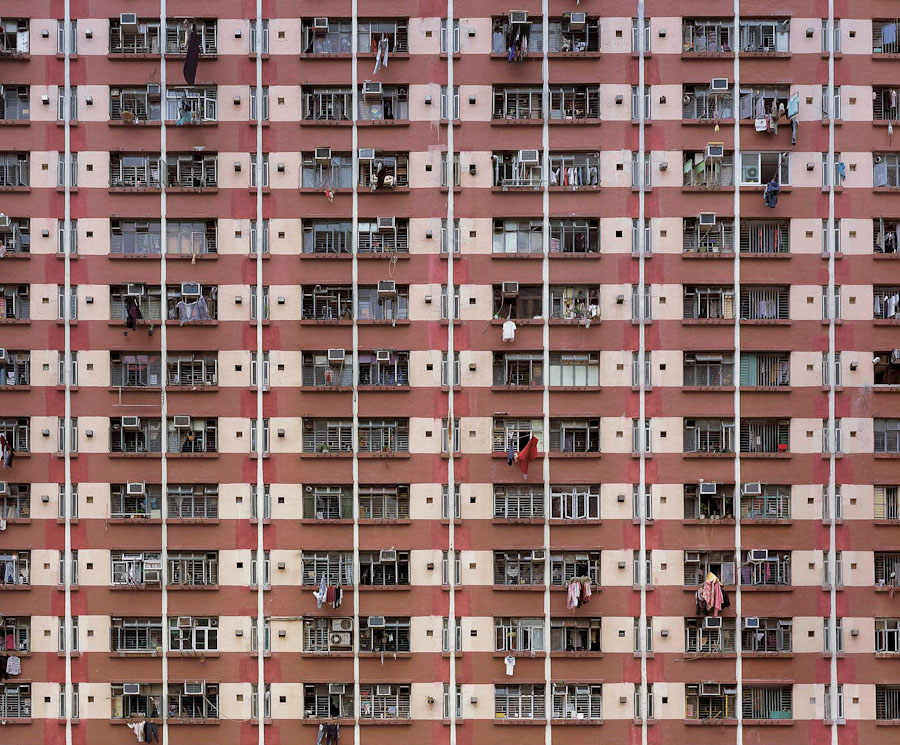
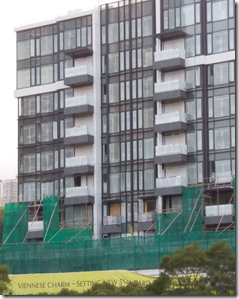
Almost everyone in Hong Kong lives in high-rise housing (for some striking photographs, take a look at Michael Wolf’s Architecture of Density). Around 30% of the population live in rented public housing – these are high-rise, high density apartment blocks, but they are safe and certainly not squalid.
Another 17% of people live in high-rise apartments that were sold under the Home Ownership scheme. Not squalid either.
50% of the population live in private housing, the vast majority of which is in high-rise towers, which vary from small and basic to large and luxurious.
Lynsey Hanley used to live on Europe’s largest public housing estate (in Birmingham), and her excellent book “Estates” offers a very personal account of how the British government’s housing policies went horribly wrong and wrecked many people’s lives. She has a more informed – and nuanced – view of the problem:
Tower blocks are generally held to be the least popular form of housing, particularly for people raising families. [..] But that’s not to say other people don’t enjoy living there, for the astonishing views, and for their self-contained nature – which in the most successful cases creates a tight-knit community.
Problems mostly arise when housing managers fail to keep on top of repairs, safety issues, residents’ complaints and other bugbears, such as blocked bin chutes and noisy neighbours. On-site caretakers, when landlords decide they can afford to employ them, solve many of these issues.
Indeed, all Hong Kong apartment blocks have on-site caretakers / security staff and most are well managed. Hence, Hong Kong high-rise housing is safe – and not squalid. Of course you pay more for larger apartments, lower density, and more open space, but that’s true everywhere.
The lesson to learn from Grenfell Tower is not that high rise blocks are inherently unsafe, but that safety needs to be a priority. Which it clearly wasn’t.
The Grenfell Action Group had previously warned about the fire threat posed by discarded rubbish “and that parked vehicles were blocking access for the emergency services. Residents feared the council’s much-vaunted £10m two-year transformation of the tower had turned the building into a “fire trap”, warning the chief fire officer that “there is only one entry and exit to the tower block itself and, in the event of a fire, the London fire brigade could only gain access to the entrance to the building by climbing four flights of narrow stairs. On top of this, the fire escape exit on the walkway level has now been sealed. Residents of Grenfell Tower do not have any confidence that our building has been satisfactorily assessed to cope with the new improvement works.”
I am not aware of any major fire in a Hong Kong high-rise, whereas six people died in Lakanal House in London in 2009, and in 1991 newly installed cladding was a key factor in a fire that destroyed an apartment block in Knowsley Heights, Liverpool.
The last major building collapse here (in 2010) was a five-storey building in To Kwa Wan (built in 1957) and a 2011 government report said that 1,400 buildings that are at least 30 years old remain in ‘dilapidated conditions’. But, again those will not be modern tower blocks and the main problem is that old buildings are often not maintained properly.
In 1972, 148 people were killed in major landslides as many apartment complexes and houses were wiped out but building standards have been significantly improved since then. Going back further, on Christmas Day in 1953 a major fire destroyed the Shek Kip Mei shanty town, and this prompted the government to start its public housing program. It’s probably fair to say that those early apartments were somewhat squalid, but that was 60 years ago, and things are a lot better now.
But not everywhere, as Tom Grundy noted in 2015:
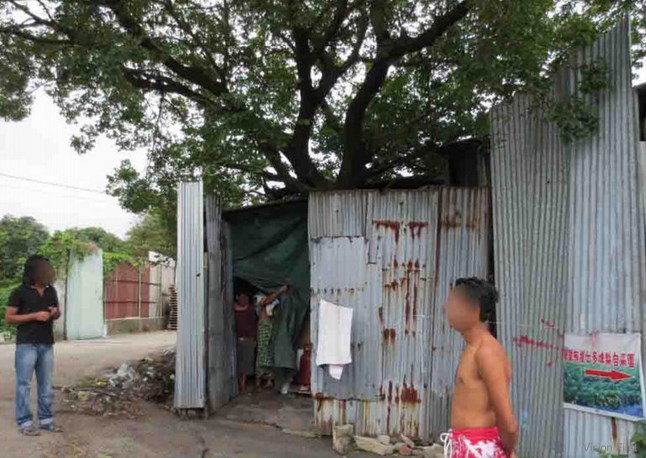
Squalor in Fanling: Slum Dwellings Return to Hong Kong
Hong Kong is a wealthy place with a handsome budget surplus – many of us would presume the state takes good care of foreign torture claimants seeking refuge in our city.
However, in reality, many are forced to live in squalid slums in the rural New Territories, subsisting for years on a meagre allowance before being returned to the countries they fled. In Ping Che, Fanling, around 150 Bangladeshi asylum seekers and torture claimants reside in shameful conditions which are an affront to human rights, dignity and social justice.
So, squalor, yes. But this is not high-rise, high density housing.
Of course some people do have really tiny living spaces, most notoriously in sub-divided privately owned apartments:
Subdivided flats can be ban gan fong (cubicle homes divided by boards, also known as “bed spaces”), tong fong (a subdivided flat with proper walls and doors), or tou fong (like tong fong but with private bathrooms). Tou fong range in quality and size, but conditions in cubicle homes are almost always abysmal.
The city’s poor also live in makeshift rooftop dwellings and cage homes – wire mesh hutches stacked one on top of another – although social workers and building surveyors say these are becoming scarcer since landlords find subdivision more profitable.
So it’s not the high-rise apartments that are the problem, it’s the way they have been adapted.
Finally, why did Simon Jenkins choose Mumbai and Hong Kong? Well, a quick Google search produced this result:
The most dense high income world urban area is Hong Kong, at 67,000 persons per square mile or 25,900 per square kilometer. Among the urban areas with more than 2.5 million population, the second-most dense is Mumbai, at 80,100 per square mile or 30,900 per square kilometer.
But I doubt that he’s ever been to either Mumbai or Hong Kong…
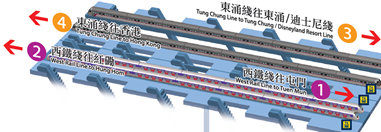
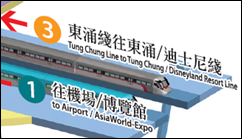
The MTR “train trip planner” recommends that for early and late departures from East Rail stations to the airport you should go via Hung Hom, Nam Cheong & Tsing Yi. This seems like bad advice, because it requires you to use two of the worst interchanges on the MTR:
At Nam Cheong, you can stroll across from a northbound West Rail service to a southbound Tung Chung line train (towards Central), but if you want to switch to the northbound service (to get to or from the airport) it takes five minutes to go down, across and then up again.
At Tsing Yi, the Tung Chung line and Airport Express tracks run parallel to each other (picture from here). But here there’s not even one cross-platform interchange – you need to go all the way down to the ground level, cross under the tracks and then go all the way back up again. Which probably takes 5 minutes. Would it really have been so difficult to provide a simpler and quicker cross-platform interchange?
Of course there are plenty of very good interchanges. To switch between the Kwun Tong line and the Tsuen Wan line you simply have to walk across the platform at either Mong Kok (same direction) or Prince Edward (opposite directions). But you should ignore this misinformation.
Or there’s Yau Tong, North Point or Lai King. Here, the most common interchanges are cross-platform, with a short walk up or down if you are going in the other direction.
Admiralty (plan) is good for the Tsuen Wan line to Island Line, but now there’s also the South Island Line, which is 3 or 4 levels down (past the so-called Sha Tin to Central link platforms, opening not very soon).
Others are not quite so easy. You’ll have a long walk at Quarry Bay (or a long wait for a lift), but North Point is an easier alternative for most journeys.
Kowloon Tong is a very busy interchange with a bit of a walk from one line to the other, and the layout is somewhat confusing. It was designed as an interchange station – the Kowloon Canton Railway (KCR – now known as MTR East Rail) started operating in 1910, Kowloon Tong station KCR station only opened in 1982, a couple of years after the MTR station – but the physical layout of the two lines makes it difficult to do any more.
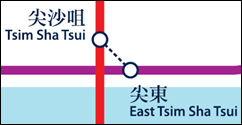
As an alternative you can change to West Rail at Hung Hom (not bad – cross-platform interchanges available, if you don’t mind waiting sometimes) and then again at Tsim Sha Tsui but that’s really two separate stations for East Rail and the Tsuen Wan Line (to be fair, it’s shown quite clearly on MTR maps).
The normal route from East Rail stations to the airport is via Kowloon Tong, Prince Edward, Lai King & Tsing Yi. That’s one one extra change, but two of them are simple cross-platform interchanges. It’s also clearly a more direct route.
BBC First (on Now TV in Hong Kong) claims to be “the home of premium drama from the BBC. Enjoy all new shows brought to you first and on demand”.
So – Sherlock season 4, that would be on BBC First? Well, yes it is in other parts of Asia, but in Hong Kong you need to pay an extra $70 to watch the three episodes on another Now TV service!
BBC First does have season 3 of Sherlock (from three years ago), and they have recently added the special episode “The Abominable Bride” (January 2016), so maybe we can look forward to season 4 a year from now.
To be fair, they are showing the new season of Doctor Who, as well as a few current BBC prime time dramas (Silent Witness, SS-GB, Call the Midwife, and Death in Paradise), a couple of ITV dramas (In Plain Sight and Unforgotten) plus daytime BBC’s Father Brown.
Singapore and Malaysia now have BBC Player, a streaming service similar to iPlayer, and this has a wider range of programming (though only a small fraction of what is on iPlayer in the UK). No idea whether this eventually come to Hong Kong or even what shows will be available, and maybe they will still try to sell the top shows separately!
Cultural insight alert: Chinese consumers “prefer a hot, rice-based breakfast to cold cereal.”
Chinese company buys 60% of The Weetabix food company. Less than five years later, they sell it on to a large US firm. Seems like an everyday tale of international commerce. But that’s too dull. No, it’s because the Chinese company failed to persuade enough Chinese people to change their eating habits. Or maybe it’s about Brexit. Here’s the BBC:
UK cereal firm Weetabix is to be bought by US firm Post Holdings for $1.8bn (£1.4bn), its owner has confirmed. Weetabix – made in the UK since 1932 – was put up for sale in January by China’s Bright Food, which bought a 60% stake in 2012.
Bright’s acquisition was the largest by a Chinese firm at the time, but it is believed to have struggled to build significant market share in China.
Chinese consumers prefer a hot, rice-based breakfast to cold cereal. While Weetabix doubled sales in China in 2016, the UK still accounts for the majority of its sales.
[..] "Weetabix has struggled to crack the Chinese market, so it is no surprise to see Bright Food selling up," said George Salmon, equity analyst at Hargreaves Lansdown.
Struggled? I’d say that doubling sales in one year is fairly impressive, and of course the UK is far and away their biggest market and that was unlikely to change any time soon.
Hong Kong’s Airport Express MTR line is set to increase fares by 10.3 percent in June – the first fee hike since it came into operation in 1998.
According to a Tuesday Legislative Council document, fares for journeys between the airport and the city proper, paid using an Octopus card, are set to rise by HK$5-HK$10. [..]
The MTR has never adjusted fees for the Airport Express, except in 2000 and 2001 when it cancelled discounts introduced at the time of the line’s opening.
Well, that’s not quite true. Last year they increased the prices for the group tickets by around 12%, as noted here (Hong Kong not so good–Airport Express).
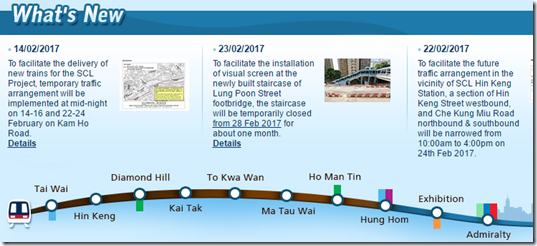
“The Sha Tin to Central Link (SCL) is a strategic railway line that stretches from Tai Wai to Admiralty”. It really isn’t!
What they are actually doing is linking up the Ma On Shan line and West Rail (through East Kowloon, in brown on the graphic) and extending East Rail from Hung Hom to Admiralty (in blue on the graphic).

 Ordinary Gweilo